

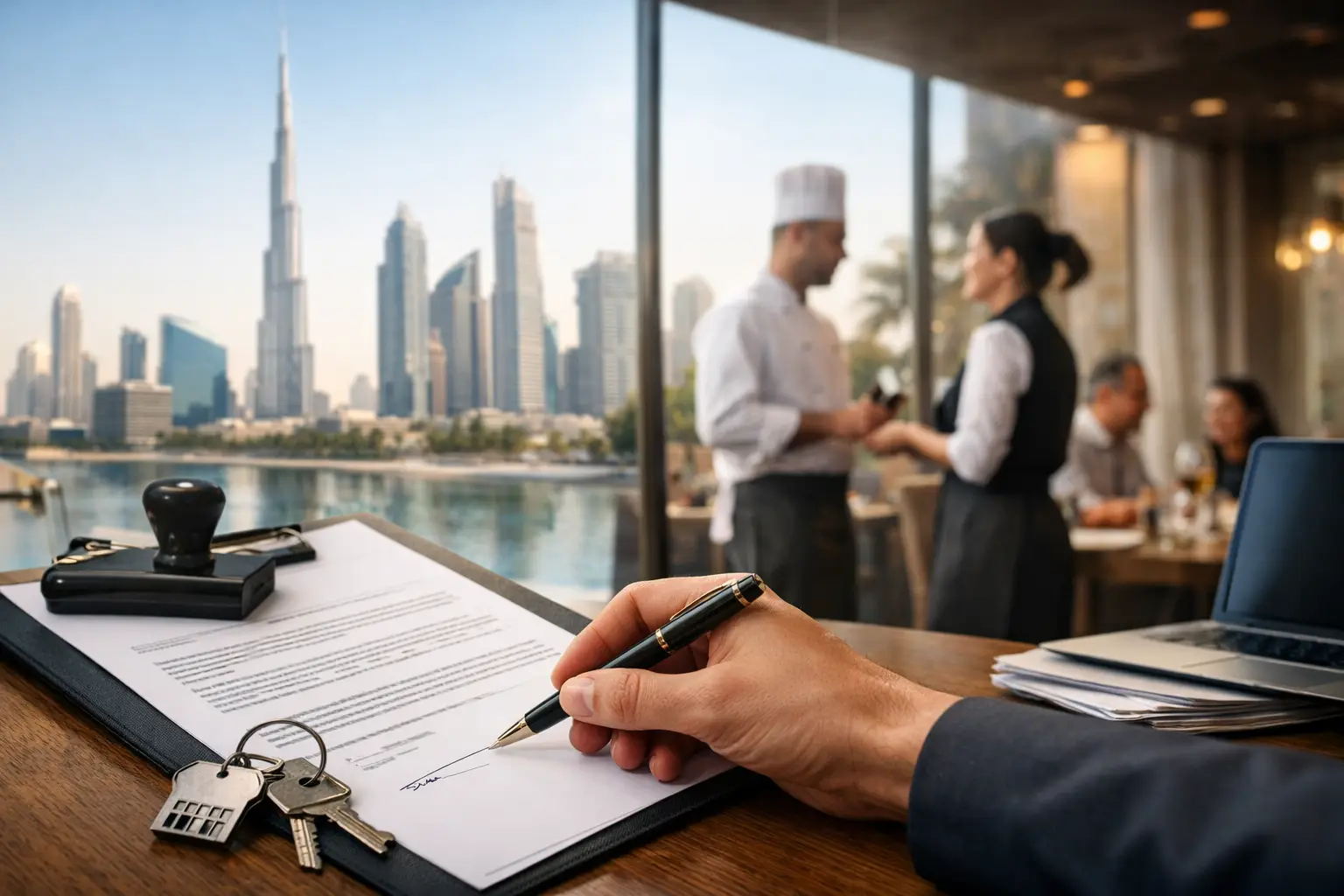
Opening a food business in Dubai moves quickly when the structure is right from the start. The challenge is that a restaurant license Dubai process is not just one form or one approval. It involves choosing the right jurisdiction, matching your activity to your concept, securing premises that fit regulatory standards, and clearing multiple authority requirements without costly backtracking.
For founders, investors, and hospitality operators, that is where most delays happen. A great concept can stall because the trade license activity does not align with the business model, the shop layout fails food safety review, or the lease is signed before approvals are properly mapped. The smarter approach is to treat licensing as an operational setup project, not a paperwork task.
What a restaurant license Dubai setup actually includes
In practical terms, your restaurant license is part of a wider approval framework. You will generally need a commercial license for the approved business activity, initial approvals from relevant authorities, tenancy documentation, fit-out approvals where applicable, and food-related clearances before you can legally operate.
This is why the answer to “How do I get a restaurant license in Dubai?” is rarely one sentence. A dine-in restaurant, cloud kitchen, cafe, bakery, food truck, and catering business may all sit within the food sector, but they can follow different approval paths. The exact process depends on your concept, location, and whether you set up on the mainland or in a free zone.
For most customer-facing restaurants serving the local Dubai market, mainland setup is the common route. It gives broader market access and fits businesses that want a physical storefront in the city. Free zones can work in some cases, especially for specialized models, but they are not always the best fit for a standard restaurant targeting walk-in or citywide operations.
Choosing the right legal route before applying
The first major decision is jurisdiction. This affects your licensing authority, office or shop requirements, visa eligibility, and how you can trade. It also affects timing.
Mainland is often the practical choice
For a traditional restaurant, cafe, or quick-service outlet in Dubai, mainland formation is usually the most commercially flexible option. It allows you to operate directly in the local market, lease retail premises in common commercial areas, and build a customer-facing brand with fewer market-access limitations.
That said, mainland setup comes with its own process discipline. Activity selection must be correct. Municipality and food control requirements must be considered early. Premises suitability matters more than many first-time founders expect.
Free zone can work, but only in the right model
A free zone structure may suit certain food production, packaged goods, or limited operational concepts, depending on the zone’s rules. But if your plan is a high-street restaurant with direct public access across Dubai, mainland is often more straightforward. This is one of those areas where trying to save money upfront can create restrictions later.
Key approvals involved in a restaurant license Dubai process
The licensing path typically starts with reserving the trade name, defining the business activity, and obtaining initial approval. After that, the process becomes more location- and operation-specific.
If you are opening a restaurant premises, tenancy documents and Ejari registration usually become central to the file. Then comes layout planning, fit-out review, and authority approvals tied to health, safety, and food handling standards. Depending on the project, you may also need civil defense-related compliance, signage approval, and permissions connected to kitchen exhaust, drainage, or gas systems.
Food businesses face closer scrutiny than many other commercial activities, for obvious reasons. Authorities want to see that storage, preparation, waste disposal, hygiene controls, and customer-facing areas meet defined standards. Even a strong retail location can become a problem if the space cannot support compliant ventilation, drainage, or kitchen design.
This is why experienced setup planning matters. If you sign a lease for a unit that looks attractive commercially but fails technically, the correction cost can be far higher than the original rent savings.
Documents and information you will usually need
The exact file varies by business type and ownership structure, but most applications require passport copies of shareholders, visa or entry documents where relevant, trade name options, proposed business activities, and incorporation forms. For entity formation, you may also need constitutional documents, approval forms, and lease-related paperwork.
For restaurant operations, layout drawings and premises details become especially important. Authorities want to review how the business will function in practice, not just on paper. If your concept includes baking, grilling, delivery operations, outdoor seating, or large-scale food preparation, those details should be reflected early.
That is where many founders benefit from working with one coordinated partner rather than separate agents for licensing, PRO work, tenancy, visas, and post-setup compliance. When the moving parts are managed in one place, document errors and sequencing issues are easier to avoid.
Cost factors founders should plan for
There is no single flat cost for a restaurant license in Dubai because the budget includes more than the license itself. Founders should plan for government fees, trade name reservation, initial approvals, tenancy costs, Ejari, fit-out expenses, municipality-related approvals, professional service fees, immigration file costs if visas are needed, and ongoing operating compliance.
The largest variation usually comes from the premises and fit-out, not the license document alone. A small takeaway outlet with a compact kitchen is a different financial project from a full-service restaurant with premium interiors, specialized equipment, and extensive ventilation work.
It also depends on scale. If you need investor visas, staff visas, accounting support, tax registration, trademark support, and corporate banking assistance, your startup cost should be viewed as a full launch budget rather than a narrow licensing fee.
Common reasons restaurant applications get delayed
Delays usually happen because the concept and the approval path were not aligned at the beginning. Sometimes the activity selected on the application does not fully match the intended operation. In other cases, the premises are leased before confirming regulatory suitability. Layout drawings can also trigger revisions if food preparation flow, sanitation planning, or equipment placement does not meet standards.
Another common issue is fragmented handling. One provider manages incorporation, another handles the lease, another works on fit-out, and no one is responsible for the approval sequence. That creates avoidable gaps. A restaurant setup is operational by nature, so coordination matters as much as compliance.
Timing also depends on how prepared the applicant is. A founder with finalized ownership documents, a clear concept, and a compliant premises option will usually move much faster than someone still changing the model mid-process.
How to make the restaurant license Dubai process smoother
The best way to reduce risk is to decide the business model before filing anything. Are you opening a dine-in restaurant, cafe, cloud kitchen, bakery, or takeaway concept? Will alcohol service be involved? Do you need delivery-only operations, indoor seating, or outdoor seating? These choices affect licensing and approvals.
Next, validate the activity and jurisdiction before committing to a location. After that, assess the premises against your operational needs, not just rent and visibility. A cheaper unit with poor technical suitability often becomes more expensive later.
It also helps to plan beyond day one. Restaurant founders often focus on opening permits but overlook banking, visas, bookkeeping, VAT, corporate tax obligations, and trademark protection. Those are not secondary issues. They affect your ability to operate cleanly and scale with less disruption.
For that reason, many investors prefer a setup partner that can coordinate the broader launch process. JK Associates supports entrepreneurs with end-to-end business setup, PRO services, visa processing, banking support, tax registration, accounting, office solutions, and related compliance requirements, which reduces the friction that comes from dealing with multiple vendors.
Is it easy to get a restaurant license in Dubai?
It is achievable, but “easy” depends on preparation. Dubai is business-friendly, and the hospitality market is attractive, but food businesses are regulated carefully. That is a good thing for operators who want a credible, well-run market. It also means shortcuts tend to show up later as delays, redesign costs, or compliance issues.
If your concept is clear, your documents are organized, and your premises are chosen with regulatory fit in mind, the process can be efficient. If those pieces are uncertain, licensing becomes slower and more expensive than expected.
A restaurant launch in Dubai works best when it is treated as a coordinated setup from license to lease, approvals, visas, and operational readiness. When those pieces are handled in the right order, you spend less time fixing problems and more time building a business customers will actually remember.