

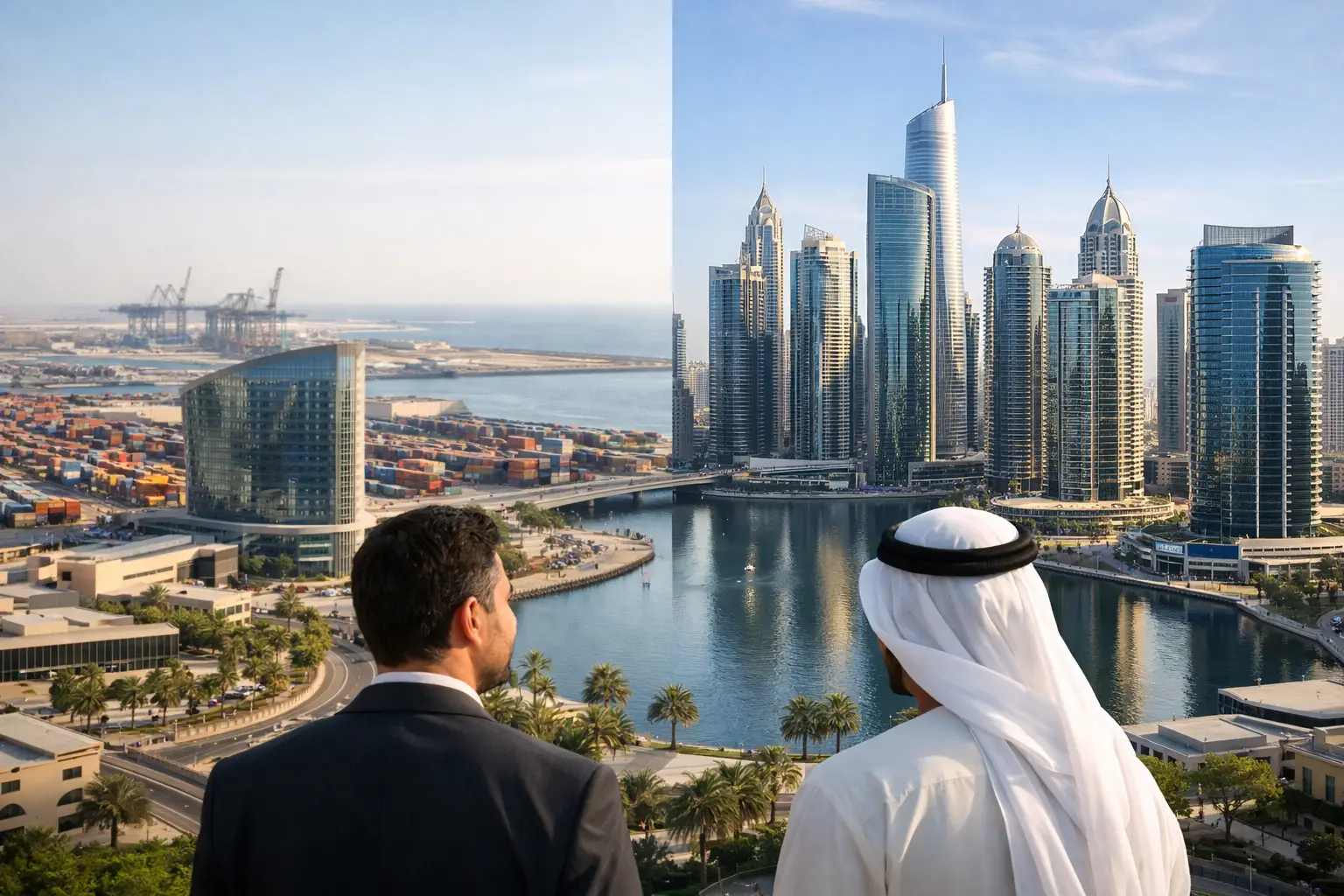
A free zone license may look similar on paper, but the operating reality can be very different. When founders ask, “JAFZA vs DMCC: which free zone is better?” the practical answer is not a single winner. The right choice depends on what you sell, where your customers and suppliers are, how much physical space you need, and how you expect the company to grow.
JAFZA and DMCC are both respected Dubai free zones with strong international reputations. Each can support 100% foreign ownership, repatriation of profits, and a well-established corporate environment. However, they serve different commercial priorities. JAFZA is built around trade, logistics, industrial operations, and proximity to Jebel Ali Port. DMCC is a central business district designed for trading, services, commodities, professional firms, and entrepreneurs who value a prestigious Dubai address.
JAFZA vs DMCC: The Core Difference
JAFZA, or Jebel Ali Free Zone Authority, is located beside Jebel Ali Port and close to Al Maktoum International Airport. Its ecosystem is particularly valuable for businesses moving physical goods. Importers, exporters, manufacturers, distributors, freight companies, and regional warehousing operations often choose JAFZA because their supply chain can operate near major transport infrastructure.
DMCC, or Dubai Multi Commodities Centre, is located in the Jumeirah Lakes Towers district, near Dubai Marina and major business corridors. It is a better natural fit for consultancies, trading companies, technology businesses, holding companies, e-commerce operators, and firms that need client-facing office access in central Dubai. DMCC is also widely recognized for commodities-focused businesses, including precious metals, diamonds, tea, coffee, and related trading activities.
The distinction matters because a license should support daily operations, not merely satisfy a registration requirement. A logistics company that must store and clear shipments will usually benefit more from JAFZA. A consulting firm meeting clients in Dubai Marina, Downtown, or DIFC may find DMCC more convenient.
Comparing JAFZA and DMCC for Business Setup
| Consideration | JAFZA | DMCC | |—|—|—| | Best suited to | Logistics, import-export, manufacturing, warehousing | Consulting, trading, services, technology, commodities | | Location | Jebel Ali, near port and airport | JLT, central Dubai business location | | Office options | Warehouses, industrial units, offices, plots | Flexi desks, serviced offices, fitted offices | | Supply-chain advantage | High | Limited compared with JAFZA | | Client-facing convenience | Depends on client location | Strong for central Dubai meetings | | Typical setup profile | Operational companies with physical-goods needs | Startups, SMEs, traders, and professional firms |
Business Activities and License Scope
Both free zones offer a broad range of activities, but activity selection should be checked carefully before incorporation. A general trading, consultancy, e-commerce, or holding structure may be possible in either jurisdiction, subject to the specific activity and license category. Yet a business requiring industrial space, storage, assembly, or high-volume import-export operations will generally find more relevant infrastructure in JAFZA.
DMCC can be especially attractive for professional and commercial activities that do not require inventory storage. Its business community includes thousands of international firms, creating a strong environment for service providers, commodity traders, and companies seeking a visible Dubai commercial presence.
Do not choose a free zone based only on a low initial package price. The approved activity, operational permissions, office requirement, visa quota, and future expansion path must all align. Changing a company structure later can involve additional cost, documentation, and disruption.
Office Requirements and Physical Presence
This is often where the JAFZA versus DMCC decision becomes clear. DMCC provides flexible workspace options that can suit early-stage companies, including shared desk arrangements and smaller offices. This can be helpful for founders who need a compliant registered address and limited visa eligibility without committing to a large premises immediately.
JAFZA offers office solutions as well, but its greater strength lies in facilities for companies with physical operational needs. Depending on the business model, this may include warehouses, light industrial units, land plots, and larger commercial space. For a company importing goods into the UAE and redistributing them across the GCC, being close to the port can reduce complexity in the long run.
A virtual-looking setup can be cost-effective at launch, but it may not fit every banking, visa, or operational requirement. Founders should also consider whether they will need staff accommodation, storage capacity, a showroom, or a customer-accessible office within the first one to three years.
Costs: Which Free Zone Is More Affordable?
There is no reliable single figure for either JAFZA or DMCC because the total cost changes based on the license activity, number of shareholders, office package, visa allocation, immigration card, establishment card, and government fees. Promotional packages can lower the initial entry cost, but they do not always include every mandatory or practical expense.
DMCC may be more accessible for service companies and small trading businesses that can begin with a flexi desk or compact office. Its central location and business community can justify a higher overall budget for companies that depend on meetings, credibility, and local networking.
JAFZA can involve a larger commitment when warehouse space, industrial facilities, or a substantial office is required. But for a trading or logistics business, the operational value can outweigh the higher upfront expense. Saving on a license while creating inefficient shipping routes, third-party storage costs, or customs delays is rarely a real saving.
When comparing quotations, ask for an itemized estimate covering the first year and renewal year. It should clarify the license, facility, visa allocation, immigration-related fees, corporate documents, and any required deposits. This makes it easier to compare like for like rather than choosing a package with hidden exclusions.
Banking, Visas, and Compliance Considerations
A free zone license does not guarantee a corporate bank account. UAE banks assess each application based on factors such as shareholder profile, business activity, source of funds, projected turnover, contracts, website presence, and the company’s actual commercial rationale. Both JAFZA and DMCC are recognized jurisdictions, but the quality of the application and supporting documents remains critical.
Visa eligibility is also linked to the selected facility and the free zone’s current rules. A flexi desk may support a limited visa quota, while larger offices can allow more employee visas. Businesses planning to hire should not treat visas as an afterthought. A company that expects a sales team, operations staff, or warehouse workforce should select premises that support its staffing plan.
Corporate tax, VAT, bookkeeping, and economic substance obligations should be reviewed early. Free zone status does not automatically mean every company receives a 0% corporate tax outcome. Eligibility depends on the company’s activities, income, compliance position, and applicable UAE tax rules. Proper accounting records and timely registrations are part of running a credible UAE business, not optional back-office tasks.
When JAFZA Is the Better Choice
JAFZA is usually the stronger option when the company’s commercial model relies on moving, storing, processing, or distributing goods. It is particularly suitable for import-export businesses, regional distribution centers, logistics providers, manufacturers, automotive businesses, food and beverage traders, and companies that need warehouse or industrial capacity.
It also makes sense for businesses targeting Africa, the GCC, and wider international trade routes through Jebel Ali Port. The location can create a meaningful advantage when shipment turnaround, container handling, customs procedures, and inventory control are central to profitability.
When DMCC Is the Better Choice
DMCC is often the better choice for founders who want a central Dubai address and a flexible route into a well-known commercial free zone. It is a strong option for consulting firms, digital agencies, technology ventures, management companies, professional service providers, commodity traders, and startups that do not need large-scale storage.
For a business that wins clients through meetings, partnerships, and a polished local presence, DMCC’s JLT location can be a practical advantage. Its office choices also give growing companies room to start lean and expand when team size or visa requirements increase.
Make the Decision Around Your Operating Model
The better free zone is the one that matches the business you will actually run, not the one with the most attractive headline price. Start with your activity, customers, suppliers, office needs, visa plan, and expected transaction flow. Then test whether the selected jurisdiction can support those needs at renewal, not just on incorporation day.
JK Associates helps entrepreneurs assess these details before they commit, coordinating company formation with visa planning, banking support, office solutions, tax registration, and ongoing compliance services. A focused pre-setup review can prevent expensive restructuring once the business is already active.
If your goods need to move through ports and warehouses, prioritize operational infrastructure. If your business grows through expertise, client access, and a central commercial address, prioritize flexibility and location. Choosing with that lens gives your UAE company a stronger foundation from its first transaction.