

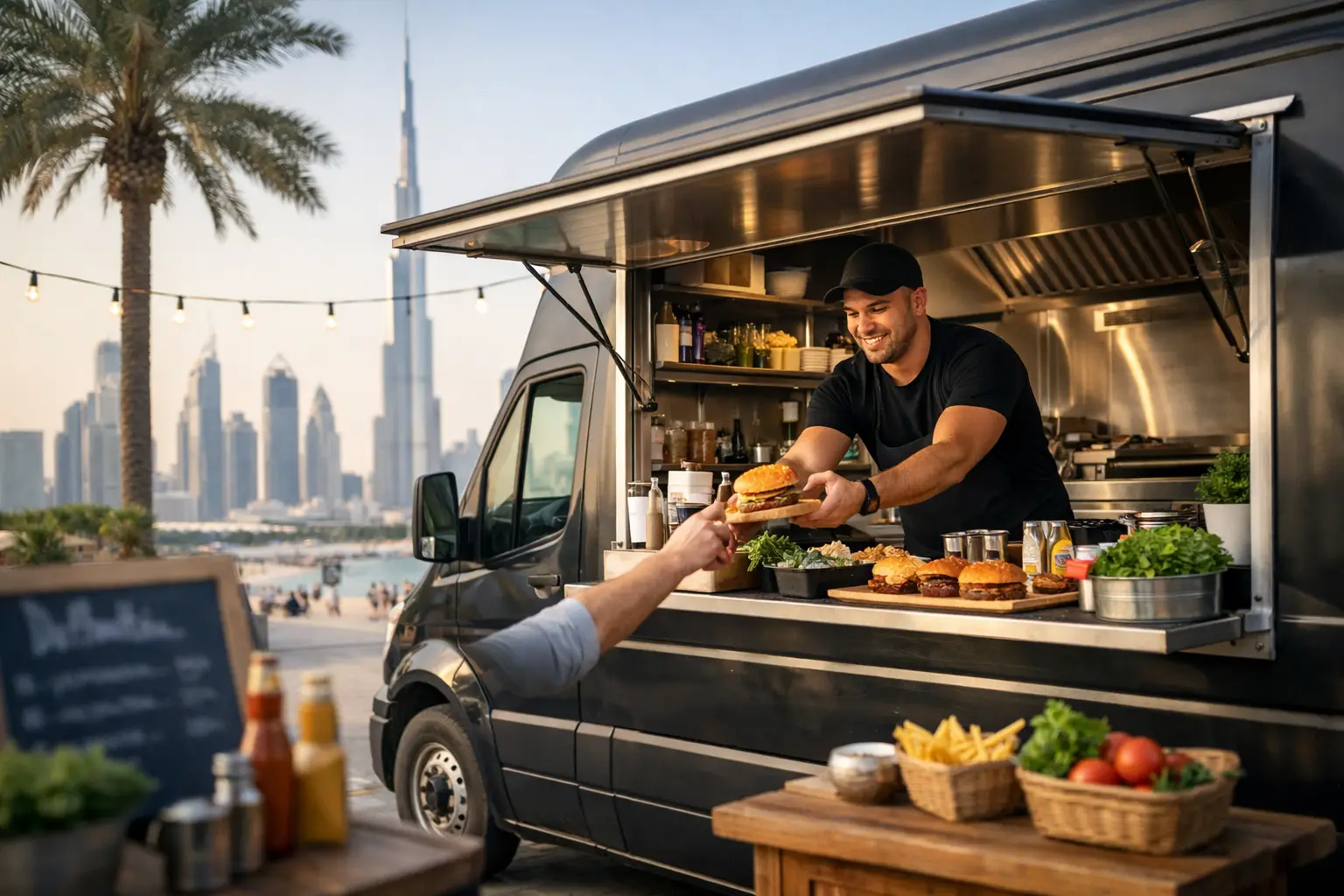
A food truck can put your brand in front of customers at beaches, business districts, festivals, and private events without the cost of a full-scale restaurant. But a Food truck business in Dubai is not simply a vehicle with a kitchen. It is a regulated food operation that requires the right commercial structure, food safety approvals, operating permissions, and a clear plan for where and how you will trade.
For founders and investors, early planning matters. Choosing the wrong license activity or assuming a truck can park and sell anywhere can create expensive delays after the vehicle, equipment, and menu are already in place.
Choose the Right Business Setup for a Food Truck Business in Dubai
Your setup route should reflect how and where you intend to operate. A mainland company is often considered by businesses planning to serve customers directly across Dubai, particularly where local contracts, event participation, or commercial operations are involved. The appropriate license activity must accurately cover your food preparation and mobile vending model.
A free zone company may suit certain ownership, operational, or cost considerations, but it does not automatically mean the business can sell food from a truck throughout Dubai. Additional approvals or a local operating arrangement may be needed depending on the location, activity, and event organizer. The most practical structure depends on your target customers, sales channels, staffing needs, and expansion plans.
Before incorporation, define whether your concept is focused on daily street-style service, corporate catering, events, pop-ups, delivery, or a combination of these. A truck that trades only at pre-approved events has very different operational requirements from one intended to serve multiple locations each week.
Licensing and Food Safety Approvals Come First
A food truck typically needs more than a standard trade license. Food-related approvals, kitchen layout requirements, inspections, and operating permits may apply. Requirements can vary based on the menu, whether food is prepared inside the truck, the type of equipment used, and whether you rely on a central or commissary kitchen.
For example, a coffee and packaged-snack vehicle may have a simpler setup than a truck cooking raw meat, frying food, or preparing high-risk items. Refrigeration, handwashing facilities, ventilation, water storage, waste handling, temperature controls, and pest prevention are all practical compliance considerations.
Do not buy or customize a vehicle before confirming the relevant design and safety requirements. Retrofitting a completed truck can be far more costly than building to the approved specification from the start. Your menu should also be commercially realistic for the available space, power capacity, storage, and food preparation process.
Secure Legal Locations to Trade
Location is one of the biggest commercial variables in a food truck model. Foot traffic may look attractive, but a profitable site is only useful if you have permission to operate there. Public areas, private venues, beaches, parks, business campuses, and event sites can each involve different approvals or agreements.
Many food truck operators build their revenue around partnerships with event organizers, property managers, schools, hotels, offices, and community destinations. This approach can provide more predictable demand than relying on walk-up sales alone. It can also reduce the risk of moving a truck to a location where selling is not permitted.
Review the commercial terms carefully. Some venues charge fixed rent, while others may request revenue sharing, minimum operating hours, exclusivity restrictions, or proof of insurance and compliance documents. A strong location agreement should support your margins rather than consume them.
Build the Numbers Around More Than the Truck
The vehicle is highly visible, but it is not the only investment. Your startup budget should account for company formation, permits, vehicle purchase or lease, fit-out, kitchen equipment, branding, insurance, staff visas, inventory, POS systems, central kitchen access where required, and working capital.
Recurring costs deserve the same attention. Fuel, maintenance, generator or utility needs, staff salaries, food wastage, delivery platform fees, event fees, packaging, and venue commissions can quickly affect profitability. A compact menu with fast service times and controlled ingredient costs is usually easier to operate than a large restaurant-style menu.
It is also wise to plan for corporate tax, VAT registration where applicable, bookkeeping, payroll records, and periodic license renewals from day one. Clean financial records help you understand which locations, menu items, and event partnerships are actually producing profit.
Prepare Your Operating Team and Documents
Food handling staff may need relevant health and training documentation, while business owners and employees will need the correct visa arrangements for their role. If you are a foreign investor, banking support and document coordination can also be significant parts of the launch process.
JK Associates can coordinate company formation alongside visa, PRO, corporate banking, accounting, tax registration, and office support requirements, helping founders avoid managing multiple service providers during a time-sensitive launch.
A food truck succeeds when compliance and customer experience work together. Start with the right license and approved operating model, then choose locations and a menu that make the numbers work. That foundation gives your mobile food concept room to grow with confidence.