

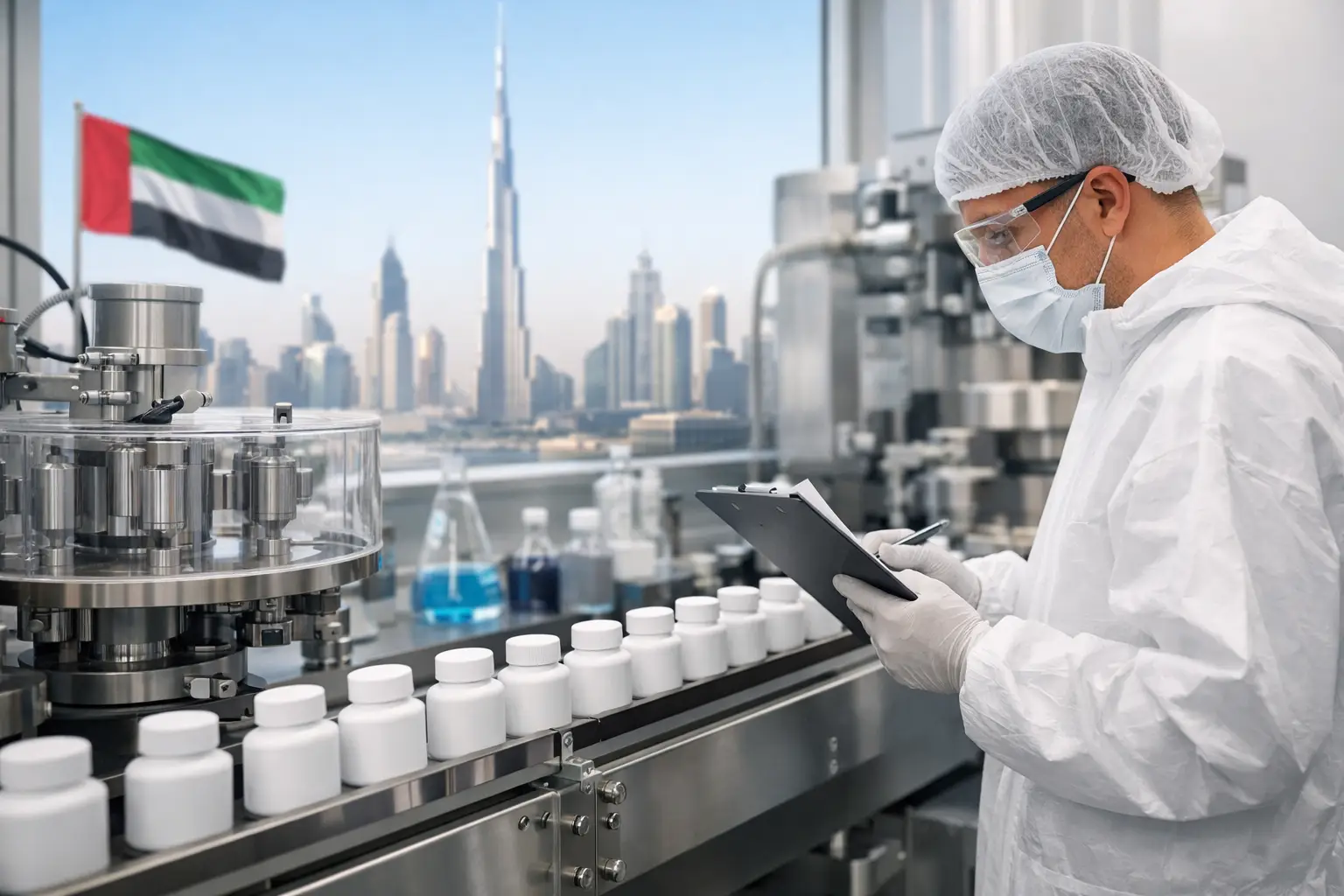
A product can be commercially promising and still fail to reach the UAE market if the manufacturing controls behind it cannot be demonstrated. For businesses pursuing GMP certification UAE, the real task is not simply obtaining a certificate. It is building a facility, operating system, and document trail that meet the expectations of the relevant regulator and customers.
Good Manufacturing Practice, or GMP, is especially relevant to pharmaceuticals, medical products, cosmetics, food supplements, and certain food or consumer-health categories. Requirements differ by product type, manufacturing activity, and location, so founders should treat GMP as an operational compliance project from the earliest business setup stage.
What GMP Certification UAE Means in Practice
GMP is a quality framework designed to ensure products are consistently made and controlled to appropriate standards. It covers the full manufacturing environment: premises, equipment, personnel, raw materials, production procedures, testing, packaging, storage, and complaint handling.
In the UAE, there is no single route that applies to every manufacturer. A pharmaceutical facility may face requirements from the Ministry of Health and Prevention, while food, cosmetics, and consumer products can involve emirate-level authorities and product-specific approvals. A GMP certificate issued following an audit may be one part of the process, but it does not replace the correct trade license, industrial approvals, product registration, or import permissions where these apply.
That distinction matters for investors. Choosing a free zone, mainland location, or warehouse before confirming facility and authority requirements can create expensive delays. The right setup route depends on what you produce, where you sell, whether you import ingredients, and whether production will take place in the UAE.
Start With the Right Business and Activity Structure
Before designing a production line or signing a lease, define the exact commercial activity. “Manufacturing” is too broad for regulatory planning. The licensing authority and regulator will need clarity on whether the business will manufacture cosmetics, package nutritional supplements, blend food ingredients, produce medical devices, or conduct another specific activity.
Your legal structure should also support the real operating model. A business that only trades finished goods has different requirements from one that imports bulk materials, repackages products, and distributes them locally. Similarly, a company manufacturing for export may need a different location strategy from one supplying pharmacies, retailers, hospitals, or online customers in the UAE.
Facility selection should follow the activity, not the other way around. The premises may need adequate zoning, washable surfaces, controlled storage conditions, pest-control arrangements, drainage, ventilation, staff changing areas, and segregation between raw materials, finished goods, rejected stock, and cleaning materials. A standard office or basic warehouse is rarely suitable for a GMP-regulated production process.
The Documentation Auditors Expect to See
GMP compliance is evidence-based. A clean facility is not enough if staff cannot show how work is controlled, recorded, reviewed, and corrected. Procedures should match the actual process on the floor. Generic templates that employees do not follow often become a weakness during inspection.
Core documentation commonly includes:
- A quality manual defining responsibilities, controls, and approval authority
- Standard operating procedures for production, cleaning, testing, storage, and release
- Batch manufacturing and packaging records for product traceability
- Supplier qualification, raw-material specifications, and incoming-goods checks
- Training records, equipment maintenance logs, calibration records, and deviation reports
The level of detail should be proportionate to the risk of the product. A small cosmetics operation will not be assessed exactly like a pharmaceutical manufacturer, but both need controlled processes, trained personnel, and reliable records. If a batch issue occurs, the company must be able to identify what happened, which materials were used, who approved the release, and where the affected products were sent.
Prepare for Inspection Before You Apply
A GMP audit is not the time to discover gaps in your operation. Conduct an internal readiness review before submitting an application or inviting a certification body. Walk through the facility as an inspector would, following the path of raw materials from receiving through storage, production, testing, finished-goods release, and dispatch.
Pay close attention to practical details. Are labels controlled so outdated versions cannot be used? Are cleaning chemicals clearly separated from ingredients? Are temperature records complete and reviewed? Do employees understand the procedure they are asked to follow? Can the business isolate and recall a batch quickly if needed?
Any nonconformities identified during an inspection should be addressed through documented corrective and preventive actions. The goal is not to promise that an issue will not recur. The goal is to identify its root cause, fix it, verify the fix, and update the system where necessary.
Avoid the Costliest Setup Mistakes
The most common error is treating GMP as a document purchase rather than a management system. Certification providers can audit against a standard, but they cannot operate quality controls on your behalf. Another frequent mistake is committing to a facility before confirming the permitted activity, technical specifications, and local authority expectations.
Businesses also underestimate lead times for product registration, laboratory testing, authority inspections, bank account documentation, visas for specialist staff, and import arrangements. These workstreams should be planned together. A production site that is ready physically but lacks the correct licensing or product approvals cannot begin selling legally.
For founders entering a regulated manufacturing segment, coordinated guidance can prevent fragmented decisions across licensing, premises, visas, tax registration, and compliance administration. JK Associates can help investors align the business setup process with their intended UAE operating model, while specialist quality and technical teams build the GMP system required for the product category.
The strongest GMP outcome is one that supports daily operations, not just an inspection date. Build the business structure and quality controls together, and your company will be better positioned to satisfy regulators, distributors, and customers from its first production run.