

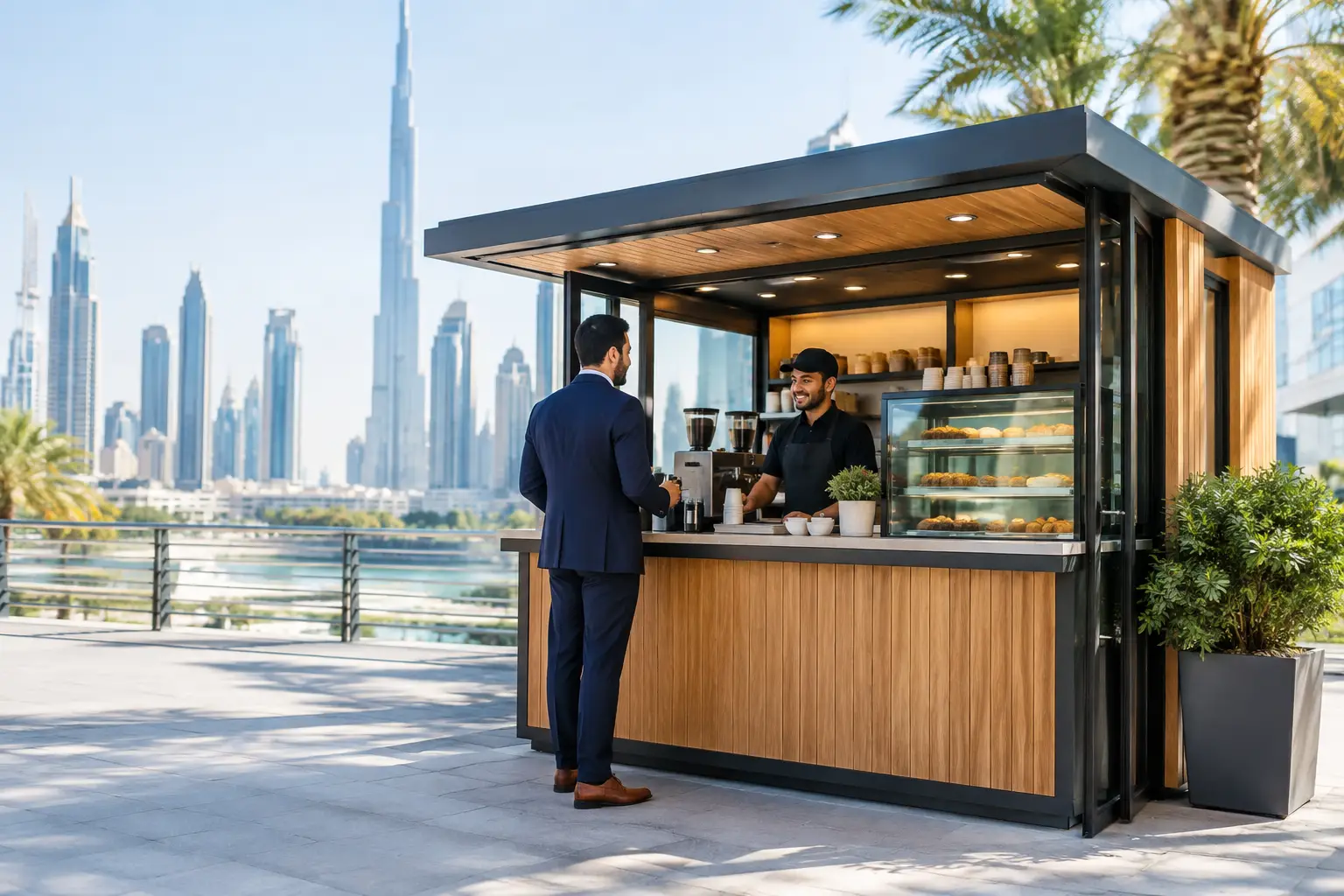
A kiosk can be one of the most efficient ways to test a retail, food, beauty, or service concept in Dubai. It puts your brand in front of high-footfall customers without the cost and fit-out commitment of a full store. However, knowing how to open a kiosk in Dubai means planning for more than a good location. Your business activity, license, mall agreement, approvals, staffing, and operating compliance must all align before you begin trading.
Start with the Kiosk Concept and Business Activity
Your proposed activity drives the setup route. A kiosk selling accessories has different requirements from one serving coffee, preparing desserts, offering mobile repairs, or providing beauty services. Be specific about what customers will buy and what work will take place at the kiosk. A license that is too broad can create unnecessary cost, while an activity that does not cover your actual operations can cause delays during mall review or inspections.
For most kiosks located in Dubai malls, airports, or public retail areas, a mainland Dubai license is the practical route because the business will trade directly within the local market. A free zone structure may suit certain concepts, but it does not automatically authorize retail operations at an off-zone kiosk. The venue location and the licensing authority must be reviewed together before incorporation.
Secure the Location Before Committing to Fit-Out
A kiosk succeeds or fails on footfall, audience fit, visibility, and commercial terms. Ask the mall or property operator about the exact kiosk dimensions, permitted operating hours, storage access, utilities, signage rules, delivery procedures, and service charges. A lower rent can be less attractive if the location has weak visibility or restrictive trading conditions.
Mall management will usually require a clear brand presentation, product details, trade license documents or evidence of the licensing process, and proposed kiosk designs. Food and beverage concepts often face additional design and hygiene requirements. Do not order fixtures, equipment, or branding until the operator has approved the concept and layout in writing.
Match Your License to the Venue Requirements
The licensing process generally starts with choosing the legal form, reserving a trade name, obtaining initial approval, and submitting the required incorporation documents. Depending on the activity and ownership structure, the documentation may include passport copies, visa and Emirates ID details for UAE residents, a business plan, and corporate documents for shareholder companies.
The tenancy or kiosk agreement is a central part of this process. A retail location must be acceptable to the relevant authority, and your lease documents may need to support address registration requirements. The right sequence matters: signing an expensive lease before confirming your activity and approval path can expose the business to avoidable risk.
Obtain Activity-Specific Approvals
Some kiosk models require approvals beyond the commercial license. A food kiosk may need food safety approvals, staff health documentation, equipment specifications, and requirements related to food handling and storage. Concepts using heat, gas, or specialized electrical equipment may also require fire and safety clearance.
Beauty, health-related, promotional, and event-based kiosks can have their own approval conditions. Short-term pop-up kiosks may be treated differently from a permanent retail installation. The correct approach depends on the venue, product category, and whether you are selling, preparing, demonstrating, or delivering a service on-site.
Prepare the Business to Operate, Not Just to Open
Once licensing and location approvals are moving forward, set up the operational foundations. This includes opening a corporate bank account, establishing payment processing, arranging inventory controls, and planning bookkeeping from the first transaction. Dubai businesses may also need VAT registration if taxable supplies reach the mandatory threshold, while corporate tax obligations should be assessed based on the company’s income, structure, and activity.
If you will employ staff, plan visas, work permits, medical testing, Emirates ID processing, and payroll administration early. A kiosk may look small from the customer side, but staffing gaps can immediately affect revenue when trading hours are long. Build leave coverage and compliance costs into your financial forecast.
Budget Beyond the License Fee
Your initial budget should account for the trade license, venue rent or revenue-share arrangement, deposits, fit-out, mall design review fees, equipment, inventory, insurance, employee costs, payment terminals, and working capital. Food concepts should also allow for wastage, consumables, maintenance, and approved storage arrangements.
Costs vary widely by location and category. A premium mall may deliver stronger brand exposure and higher sales potential, but it can also require a more polished design, larger deposit, and greater operating reserves. The best kiosk is not necessarily the cheapest one. It is the one whose projected sales can support its total occupancy and staffing costs.
A coordinated setup process helps you move from concept to opening with fewer surprises. JK Associates can support entrepreneurs with licensing, visa processing, banking assistance, tax registration, accounting, and ongoing PRO services, so the administrative work stays connected as your kiosk takes shape. Before you sign the final lease, make sure every approval, activity, and cost assumption supports the business you intend to run.