

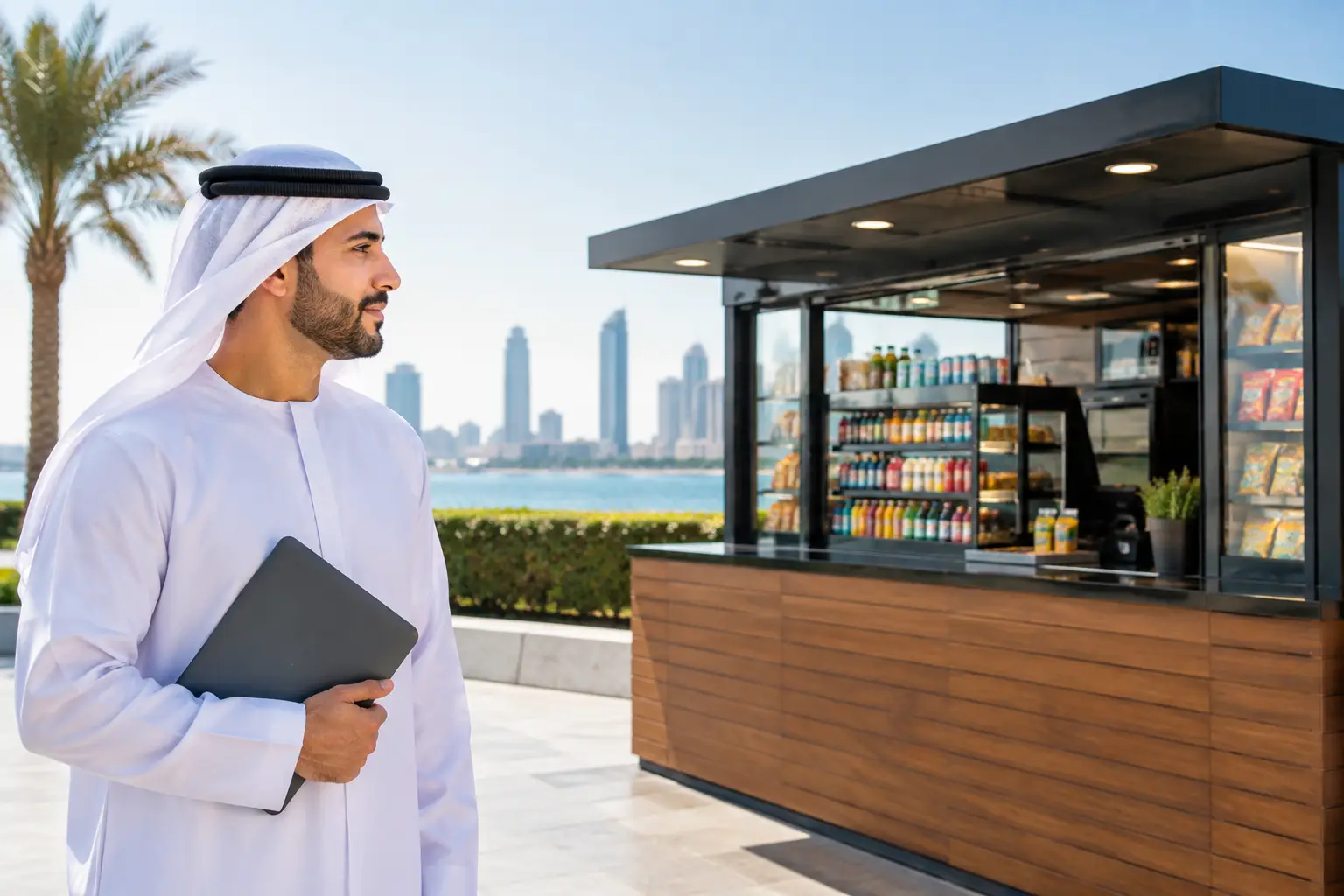
A kiosk can be one of the most efficient ways to test a retail concept in the UAE. It gives founders visibility in a mall, market, hotel, or high-footfall public venue without committing to a full-sized shop. However, obtaining a kiosk license in Ajman involves more than selecting a location and installing a counter. Your business activity, licensing jurisdiction, venue approval, product category, and operating documents must align before you begin trading.
For entrepreneurs and investors, the right setup route depends on what the kiosk will sell, where it will operate, and whether the business needs visas, imports, or a local distribution structure. A well-planned application helps avoid the common problem of securing a desirable kiosk location only to find that the proposed activity is not approved for that venue or license.
What Is a Kiosk License in Ajman?
A kiosk license is generally a commercial license and set of location approvals that allow a business to operate from a compact retail unit, stand, cart, or temporary retail space. In Ajman, the core license is usually issued according to the chosen business jurisdiction, while the kiosk’s physical operation may also require approval from the property owner, mall management, event organizer, or relevant local authority.
The term “kiosk license” is often used broadly. It does not always refer to one standalone license category. Instead, it describes a business license with an activity suitable for kiosk-based trading, supported by the necessary premises and operational approvals.
For example, a phone accessories kiosk, coffee counter, perfume stand, gift kiosk, or cosmetics display may each require a different activity classification. Food, beverages, beauty services, and products subject to health or safety standards can involve additional requirements. This is why the activity should be confirmed before signing a rental or concession agreement.
Choosing the Right Setup Route
The most suitable route is determined primarily by the kiosk location. If the kiosk will operate in a mall, public retail space, or commercial area in Ajman’s mainland market, a mainland commercial license is often the practical option. It allows the company to trade directly within the local UAE market, subject to the approved activity and premises requirements.
A free zone company can be appropriate in specific circumstances, particularly where the business is based within a free zone, serves a defined business ecosystem, or is structured around trading, logistics, or regional operations. But a free zone license should not be assumed to authorize retail activity at any mainland venue. External operations may require additional arrangements, approvals, or a mainland structure.
A temporary kiosk at an exhibition, festival, seasonal market, or promotional event can follow a different approval path from a permanent mall kiosk. The organizer may have its own vendor conditions, operating hours, insurance requirements, design rules, and short-term permit process. A temporary arrangement may be ideal for market testing, but it should not be treated as a substitute for a properly licensed ongoing business.
Activities Commonly Used for Ajman Kiosks
The business activity listed on the license must accurately reflect what the kiosk does. Choosing a broad or mismatched activity simply because it appears cheaper can create problems during inspections, banking, supplier onboarding, visa applications, or lease approval.
Common kiosk concepts include retail trading of accessories, gifts, perfumes, packaged foods, confectionery, cosmetics, mobile products, flowers, and specialty consumer goods. Service-based concepts may include printing, repair services, travel-related support, or selected personal services, depending on the applicable approvals.
Food and beverage kiosks need particular attention. Selling packaged snacks is not the same as preparing coffee, blending juices, handling fresh food, or cooking on-site. The equipment, hygiene standards, staff training, storage arrangements, waste disposal, and authority approvals can differ significantly. Before committing to a food concept, confirm whether the venue permits preparation, ventilation, water connections, refrigeration, or gas-based equipment.
Documents and Approvals You May Need
The exact document list varies by activity, legal structure, and shareholder profile. Most applicants should expect to provide passport copies for owners and managers, visa or Emirates ID copies where applicable, a proposed trade name, and details of the planned business activities.
For a kiosk location, the venue documentation is equally important. Mall management or the property owner may request a kiosk layout, branding proposal, product list, fit-out plan, trade license copy, insurance documents, and approvals related to fire safety or food handling. Some venues also require a security deposit, revenue-sharing arrangement, or minimum operating commitment.
If the company is owned by another corporate entity, additional documents may be required, such as the parent company’s incorporation records, board resolution, and authorized signatory documents. Foreign corporate papers can require attestation and certified translation, depending on their country of origin and the authority’s requirements.
It is also sensible to address trademark protection early if the kiosk will trade under a distinctive brand. A license permits the business activity, but it does not automatically protect the name, logo, or product identity from being used by others.
The Process for Getting a Kiosk License in Ajman
A reliable application process begins with a feasibility check rather than a form submission. Confirm the kiosk concept, commercial activity, shareholder structure, and preferred venue first. This makes it easier to identify whether a mainland or free zone route fits the business and whether special approvals are likely.
Once the activity and jurisdiction are selected, the trade name can be reserved and the initial licensing application prepared. The company formation documents are then submitted, and the legal entity is established in line with the chosen structure. Depending on the case, this stage may include selecting a manager, preparing constitutional documents, and arranging a registered address or office solution.
The physical kiosk approval should move forward alongside licensing, not after every other step is complete. A venue may approve one product category but reject another because of tenant exclusivity, brand positioning, or operational restrictions. Getting written clarity from the property side early protects your budget and timeline.
After the license is issued and the kiosk agreement is finalized, the business can complete operational tasks such as employee visas, labor-related registrations where applicable, corporate banking support, tax registration assessments, accounting setup, and point-of-sale planning. The sequence is not identical for every business, but coordination prevents unnecessary rework.
Cost Factors to Plan For
There is no single fixed cost for a kiosk license in Ajman. The final budget depends on the legal jurisdiction, selected activity, number of shareholders, visa requirements, location, lease terms, kiosk construction, and any industry-specific approvals.
Licensing fees are only one part of the investment. Entrepreneurs should also account for trade name reservation, establishment and immigration-related files if visas are needed, venue rent or concession fees, fit-out, signage, insurance, product inventory, payment terminals, staff costs, and ongoing license renewal.
Mall kiosks can offer valuable foot traffic, but they may have higher rental commitments and stricter operating rules. A market or event kiosk may involve lower initial exposure but can produce seasonal sales patterns and less predictable customer volume. The best option depends on your product margin, expected transaction value, target audience, and ability to operate consistently during required hours.
Compliance After Launch
A kiosk business remains responsible for compliance after opening day. The trade license must be renewed on time, and the actual products or services sold should remain within the approved business activities. If you add a new product category, change the business name, introduce food preparation, relocate the kiosk, or bring in a new partner, update the relevant records before proceeding.
Businesses that import products should also consider customs and import-export requirements, labeling rules, supplier documentation, and product-specific approvals. VAT registration depends on taxable turnover and regulatory thresholds, while corporate tax obligations should be assessed based on the company’s structure and financial position. Proper bookkeeping from the first sale makes these obligations far easier to manage.
For founders who need a coordinated setup, JK Associates can support the licensing process alongside visa, banking, tax, accounting, and documentation requirements. This is especially useful when a kiosk is the first stage of a wider UAE retail expansion.
A kiosk may occupy only a few square meters, but it represents a complete commercial operation. Treat the activity selection and venue approval with the same care you would give a full retail store, and your Ajman launch will have a stronger foundation to grow from.