

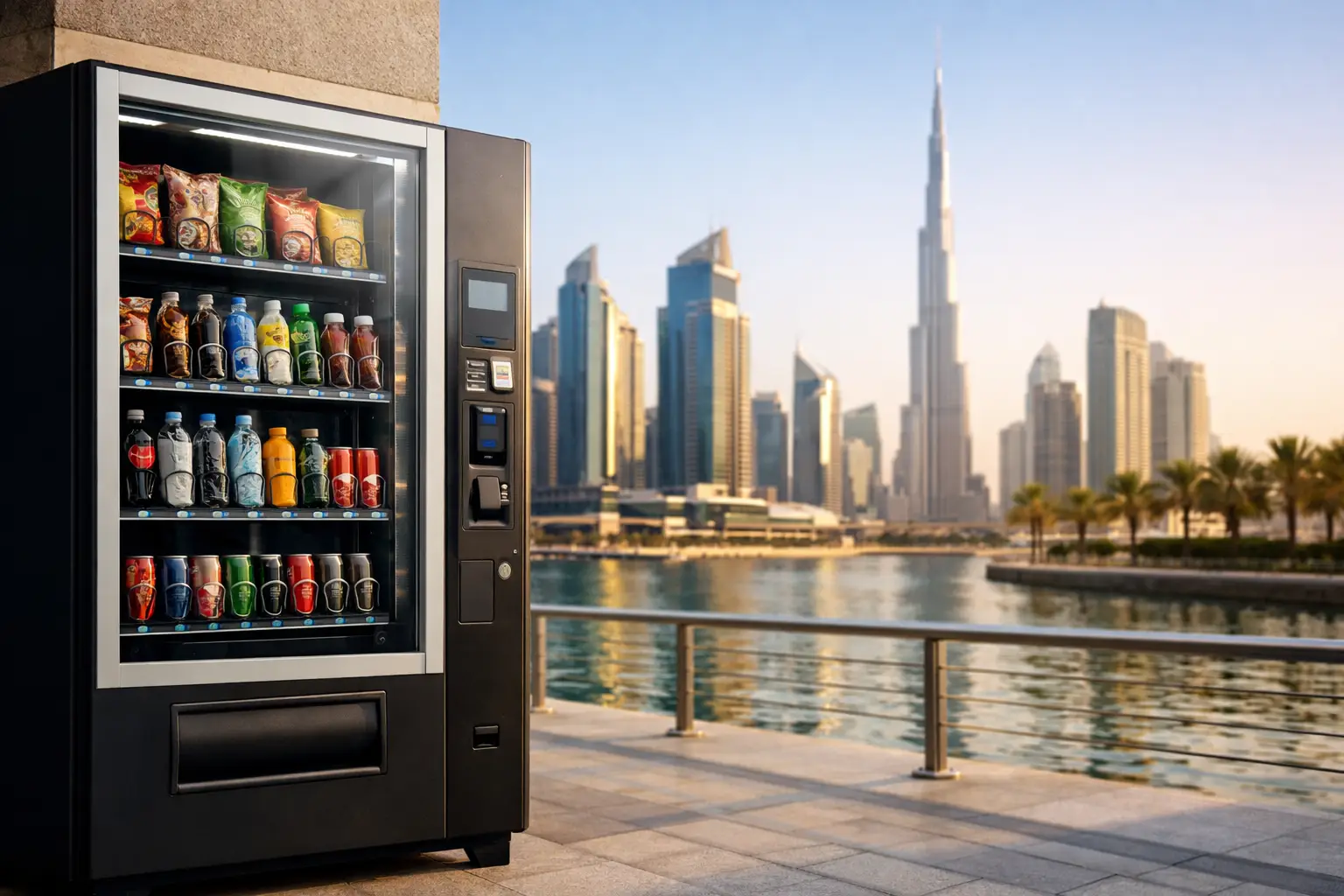
A vending machine can sell around the clock, but in Dubai, the machine itself is only one part of the business. The real work is securing the right commercial license, placing machines in approved locations, managing product compliance, and keeping stock available where demand is highest. Understanding how to start a vending machine business in Dubai before purchasing equipment can prevent costly changes later.
Start with a practical vending concept
Define what your machines will sell and where they will operate. A machine offering bottled drinks and packaged snacks has different stocking, storage, and approval considerations than one selling fresh food, coffee, electronics, personal-care items, or specialty products.
Your location strategy should shape the concept. Office buildings may support coffee, healthy snacks, and quick meals; residential towers may favor everyday essentials; gyms, hospitals, schools, transport locations, and tourist attractions each have their own customer patterns and site restrictions. High foot traffic is valuable, but it is not enough on its own. A location must also offer suitable space, electricity, access for replenishment, and a commercial agreement that leaves room for profit after rent or revenue sharing.
Before committing to a supplier, prepare a simple operating plan covering the number of machines, product categories, expected sales per location, restocking frequency, maintenance costs, payment processing charges, and site fees. This provides a more realistic picture of capital requirements than the purchase price of a machine alone.
Choose the right business setup and license
For operators placing vending machines across Dubai, a mainland company is often the most direct setup route because it supports commercial activity in the local UAE market. The exact business activity should be selected carefully with the licensing authority. It must reflect the nature of your operation, whether that is vending machine trading, food and beverage distribution, machine operation, or a related commercial activity.
A free zone company can be suitable in certain cases, especially where warehousing, international trading, or a free zone-based operation is central to the model. However, selling and operating machines at mainland locations may require an additional mainland structure, a distributor arrangement, or other approvals depending on the activity and commercial model. This is why jurisdiction should be decided based on how and where revenue will be generated, not only on the initial license cost.
Company formation generally involves reserving a trade name, obtaining initial approval, preparing constitutional documents, securing an address where required, and receiving the trade license. If the business will employ staff or the owner requires UAE residency, visa eligibility and immigration establishment requirements should be planned at the same time.
Secure site approvals before installing machines
A vending machine cannot simply be placed in a lobby, mall, or office corridor because the area appears busy. You need a written agreement with the property owner, facilities manager, tenant, or venue operator. The agreement should clearly state the machine location, electricity responsibility, access hours, maintenance access, lease period, branding rules, liability, and whether payment is a fixed monthly fee or a percentage of sales.
Many premium locations will ask for proof of trade licensing, insurance, product details, machine specifications, and hygiene procedures before approving a placement. Malls, educational institutions, healthcare facilities, and government-related premises may have stricter internal vendor requirements. Obtain approval before ordering a large fleet of machines.
Meet food, import, and product requirements
If your machines sell food or beverages, product handling is a key compliance issue. Packaged items should be appropriately labeled, stored within required temperatures, and monitored for expiry dates. Fresh food, chilled products, coffee machines, and machines that prepare items on site can involve additional food-safety requirements and approvals from relevant Dubai authorities.
Businesses importing machines, snacks, beverages, or other inventory should also review customs registration and import-export code requirements. Product documentation, supplier invoices, country-of-origin details, and labeling standards should be organized from the beginning. Counterfeit, unapproved, or improperly labeled goods can create operational and reputational risk.
Build operations around cashless payments and uptime
Dubai customers expect convenient payment options. Select vending machines that support card payments, mobile wallets, and remote monitoring where commercially viable. Remote reporting helps track sales, stock levels, temperature alerts, and machine faults without waiting for a customer complaint.
The business is won through reliability. An empty machine, payment error, or expired product quickly damages the value of a location agreement. Set clear routines for replenishment, cleaning, cash reconciliation where applicable, technical servicing, and product rotation. Keep spare parts and a service arrangement available, particularly if the equipment is imported.
Plan banking, tax, and financial controls early
Open a corporate bank account that can support supplier payments, payment gateway settlements, and day-to-day operating expenses. Maintain clean records for machine purchases, stock, venue payments, maintenance, payroll, and sales. This is essential for understanding which locations are actually profitable.
VAT registration becomes mandatory when taxable supplies exceed AED 375,000 in a 12-month period, while voluntary registration may be available from AED 187,500, subject to eligibility. UAE corporate tax also applies based on taxable income and the company’s circumstances. Do not treat tax registration and bookkeeping as post-launch tasks, particularly when you have multiple machines, payment channels, and imported inventory.
JK Associates can coordinate company formation, visa support, corporate banking assistance, tax registration, bookkeeping, and ongoing PRO services so your vending operation starts with the right compliance structure. With the license, locations, approvals, and operating controls aligned, you can focus on the part that drives growth: placing the right machine in the right location and keeping it profitable.