

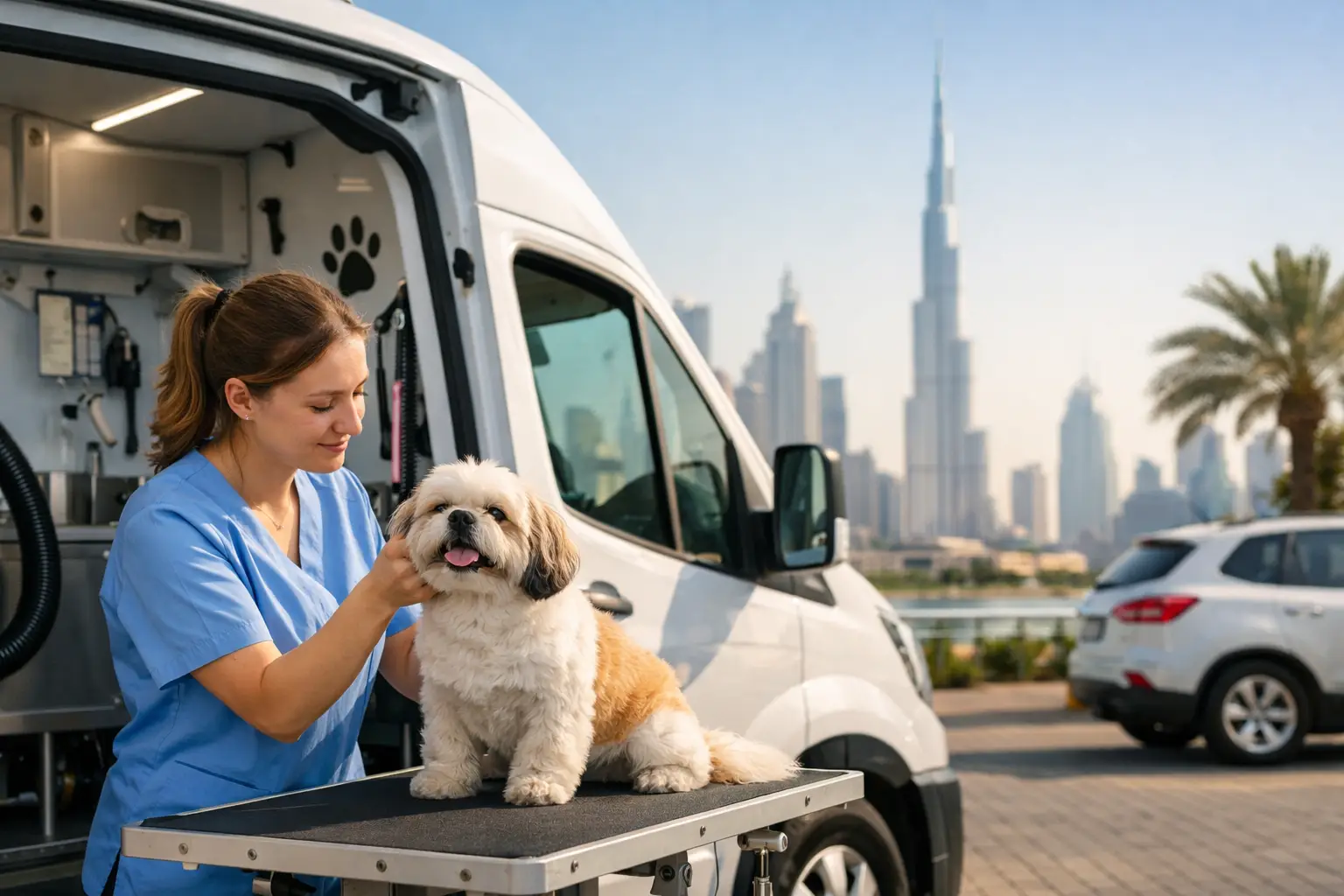
A mobile grooming van can meet pet owners where convenience matters most: outside a villa, at a residential community, or near a busy professional’s office. But this is not simply a standard salon on wheels. If you are asking how to set up a mobile pet grooming license in Dubai and what the procedures are, the key is to align your business activity, legal structure, premises arrangement, and vehicle operations before you begin serving clients.
Dubai has strong demand for quality pet care, particularly in communities with high numbers of expatriate families and working professionals. At the same time, animal welfare, sanitation, parking, and commercial vehicle compliance all need careful attention. A well-planned setup helps you launch with confidence and avoids the costly issue of holding a license that does not fully cover how you actually operate.
Start With the Right Mobile Pet Grooming Activity in Dubai
Your first decision is the licensed activity. Mobile pet grooming is generally structured around a pet grooming or animal care service activity, subject to the activity descriptions available through Dubai’s licensing authorities at the time of application. The activity should accurately reflect services such as bathing, brushing, coat trimming, nail care, ear cleaning, and basic hygiene care for pets.
Do not assume that every pet-related service falls under the same approval. Pet boarding, veterinary treatment, pet transport, animal sales, and pet food trading can have different requirements. A grooming license does not automatically authorize medical procedures, prescriptions, vaccinations, or the sale of regulated animal products.
For most founders who plan to serve customers across Dubai, a Dubai mainland company is the practical route. It allows the business to contract directly with customers and operate across the local market, subject to the required operational approvals. A free zone company can be suitable for certain business models, but it may not be the most straightforward option for a van-based service conducting day-to-day work throughout Dubai. The right route depends on your customers, ownership plans, visa needs, and the authorities governing the chosen activity.
How to Set Up a Mobile Pet Grooming License in Dubai
The licensing process begins with a clear business plan, not a van purchase. Define the services you will offer, whether appointments will be home-based or community-based, how many staff members will travel in the vehicle, and whether the vehicle will carry water tanks, dryers, generators, grooming tables, or retail inventory. These details affect your compliance pathway and operating costs.
Choose the legal structure and reserve the trade name
Many small service businesses are established as a limited liability company, although the most appropriate legal form depends on the ownership structure and licensing conditions. You will then select and reserve a trade name that meets Dubai naming rules. Avoid names that imply a government affiliation, use restricted terms, or suggest veterinary authority if your business is only providing grooming.
The initial approval stage confirms that the proposed shareholders and business concept can proceed with the formation process. Foreign investors will normally need passport copies, visa and Emirates ID copies if they are UAE residents, and additional documents where a corporate shareholder is involved.
Secure the required business address or facility arrangement
A mobile service still needs a legally acceptable registered address. This may be an office, a flexi-desk where permitted, or another approved business facility tied to the license requirements. The address is more than an administrative formality. It may be needed for licensing records, visa eligibility, banking, document delivery, and inspections.
In some cases, the business may also need a suitable base for vehicle cleaning, equipment storage, waste handling, water refilling, laundry, or staff administration. Do not rely on a residential garage or informal storage arrangement without confirming that it is permitted. Your operational base should match the scale and hygiene requirements of your business.
Obtain sector and operational approvals
A mobile grooming company may need approvals or compliance confirmation from relevant Dubai authorities, particularly where animal handling, hygiene, sanitation, water use, waste disposal, or vehicle modification is involved. Requirements can change based on the exact activity, location, and equipment installed in the van.
For example, a vehicle with built-in bathing facilities, drainage, electrical systems, and water tanks presents different considerations than a basic grooming vehicle used for dry services. Authorities may examine how wastewater is managed, whether tools can be sanitized, how animals are safely restrained, and whether the vehicle is appropriate for commercial use.
This is where founders should avoid copying another operator’s setup. A configuration that was accepted for one company may not be acceptable for yours, especially if your activity wording, facility, or vehicle specifications differ.
Issue the license and complete post-setup registrations
Once the legal documents, tenancy or facility documents, and required approvals are in place, the trade license can be issued. Afterward, you may need to arrange establishment card formalities, employee visas, labor registrations, corporate bank account support, accounting processes, and tax registrations where applicable.
Corporate tax registration and VAT registration should be evaluated early rather than treated as an afterthought. VAT registration becomes mandatory once taxable supplies exceed the applicable UAE threshold, while voluntary registration may be relevant for some businesses. Good bookkeeping from the first customer appointment makes compliance, cash-flow planning, and tax reporting much easier.
Vehicle Compliance Is Part of the Business Model
The vehicle is your storefront, treatment space, and transport unit. It should be professionally fitted, safe for animals and staff, and suitable for Dubai’s heat. A poor-quality conversion may create hygiene issues, equipment failures, or insurance complications that damage the business before it builds a customer base.
Your setup may need to account for commercial vehicle registration, vehicle branding rules, insurance coverage, parking permissions, and any approvals connected to modifications. Confirm whether your insurer covers animals in your care, mobile operations, equipment, third-party liability, and employee use of the vehicle.
Operationally, plan for air conditioning, non-slip flooring, washable surfaces, safe cages or restraint points, first-aid supplies, clean and used towel separation, and temperature-controlled storage where needed. Grooming staff should also have clear procedures for aggressive animals, pets with visible skin concerns, emergency contact details, and situations where veterinary care is required. Groomers should not perform work that crosses into veterinary treatment unless separately authorized and properly qualified.
What Are the Proceeds? Procedures, Costs, and Revenue
The word “proceeds” can mean two different things in this context. If you mean the procedures, the process is: select the correct activity and jurisdiction, reserve the name, obtain initial approval, secure a compliant business address, obtain any relevant sector or vehicle approvals, issue the license, and complete visa, banking, tax, and operational registrations.
If you mean business proceeds or potential income, the answer depends on your service mix and utilization. A mobile groomer can generate revenue from grooming appointments, de-shedding treatments, premium coat care, puppy packages, recurring monthly memberships, and approved retail add-ons. Revenue is driven less by the license itself than by how many appointments the van can complete per day, your travel radius, average service price, staff productivity, and customer retention.
The principal costs include license and registration fees, office or facility expenses, vehicle purchase or lease, fit-out, insurance, fuel, maintenance, staff salaries, visa costs, grooming supplies, booking software, marketing, and payment processing. Water, power, parking, and cleaning arrangements can also affect margins. A lower-cost launch may use a modest vehicle and focused service menu, while a premium van with advanced equipment and multiple groomers requires greater upfront capital.
Avoid quoting customers based only on competitors’ prices. Calculate the true cost of travel time, grooming time, supplies, staff, vehicle depreciation, and no-show risk. Mobile grooming can command a convenience premium, but only if punctuality, pet handling, cleanliness, and service quality support that price.
Build a Compliant Service Before You Scale
A disciplined launch creates a stronger foundation than rushing into marketing with an incomplete setup. Start with a manageable service area and appointment schedule, document your animal handling and sanitation procedures, and keep customer consent records. As demand grows, you can add vans, groomers, retail products, or complementary pet-care services after confirming that the relevant activities and approvals are in place.
For investors who want a coordinated route through licensing, approvals, visas, banking support, tax registrations, and ongoing PRO services, JK Associates can help organize the setup around the realities of a mobile operation. The most valuable first step is to define exactly what will happen inside the van, because that detail shapes every approval that follows.