

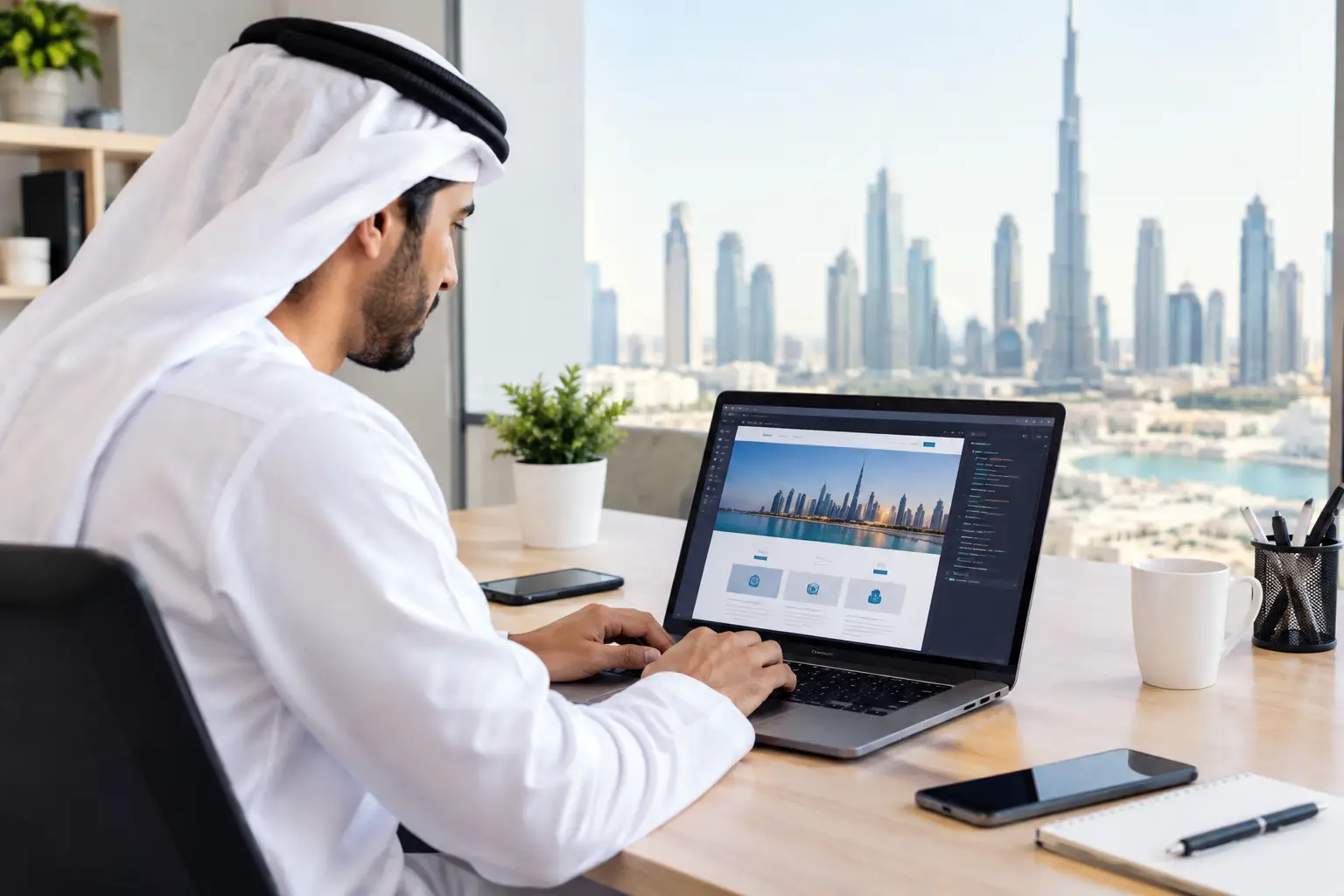
A business license establishes your legal presence in the UAE. Your website often establishes your commercial credibility before a prospect sends a message, requests a quote, or visits your office. For founders, website development for small businesses UAE is not simply a design decision. It is a practical part of market entry, customer acquisition, and day-to-day business operations.
A clear, trustworthy website gives local customers, international buyers, and potential partners a fast way to understand what your company does and how to contact you. For a newly formed company in Dubai or elsewhere in the UAE, that clarity can make the difference between a promising inquiry and a lost opportunity.
Start With the Business Objective
Many small businesses begin with a broad request: “We need a website.” A better starting point is to define what the website needs to achieve in the next six to twelve months. A consulting firm may need qualified consultation requests. An import-export company may need product inquiries from overseas buyers. A salon, clinic, restaurant, or local service provider may need calls, bookings, directions, and WhatsApp messages.
The objective determines the structure. A website designed to generate leads should prioritize services, proof of expertise, contact options, and clear calls to action. An e-commerce website needs product management, payment functionality, delivery terms, inventory processes, and customer support workflows. Trying to add every possible feature at launch can delay the project and make the site harder to manage.
For many UAE startups, a focused first version is the sensible choice. Build the pages customers need to make a decision, then expand once you have real questions, search data, and sales feedback.
What a Small Business Website Should Include
A professional small business website does not need dozens of pages. It does need the right information in the right order. Visitors should quickly see what you offer, who you serve, where you operate, and how to take the next step.
At a minimum, most UAE businesses benefit from a well-written home page, service or product pages, an about page, a contact page, and clear legal or policy information where relevant. Service pages should explain the outcome clients receive, not just list industry terms. If you offer multiple services, give each major service enough space to answer common questions and show its value.
Your contact page should make it easy for prospects to act. Include a UAE phone number, business email, location details if you meet clients in person, and a simple inquiry form. WhatsApp can be useful for fast-moving local inquiries, but it should support rather than replace a structured lead process. A form that asks for the service needed, company name, and preferred contact method helps your team respond with context.
Credibility signals matter, particularly for new companies. These may include professional team profiles, client testimonials where permission has been obtained, relevant certifications, project examples, and clear information about your business location and operating hours. Do not make claims that cannot be verified. In regulated sectors, accurate communication is essential.
Website Development for Small Businesses UAE: Local Requirements
A website serving the UAE market should reflect how customers actually research and buy. Mobile use is high, and many visitors will view your site from a phone before making contact through a call or messaging app. Mobile design is therefore a business requirement, not an optional finishing touch.
Speed also affects results. Heavy videos, oversized images, unnecessary animations, and poorly configured plugins can slow a website and discourage visitors. A polished visual style is valuable, but it should not come at the expense of usability. The right balance depends on your industry. A creative studio may need a more visual presentation, while a B2B advisory firm may benefit more from speed, clarity, and detailed service information.
Language is another decision that requires care. English is widely used across UAE business, particularly for international investors and corporate clients. Arabic content may be appropriate when targeting local consumers, government-related audiences, or sectors where Arabic communication builds greater trust. A bilingual website should be properly translated and reviewed, not copied through automated translation. Inaccurate wording can weaken a professional brand and create misunderstandings.
Your business details should also align across your website, trade license records, social profiles, invoices, and marketing materials. Consistency supports trust and reduces confusion when clients, banks, suppliers, or service providers review your company information.
Plan Content Before Choosing Design Features
The strongest websites are built around customer questions. Before approving layouts or colors, identify what prospects need to know before they contact you. They may ask about pricing approach, service scope, delivery timelines, locations served, industry experience, or required documents.
This is especially relevant for businesses offering professional services. A visitor who cannot understand your scope of work may leave even if the design looks impressive. Explain your process in plain language. Clarify what is included, what may require a separate quotation, and what clients should prepare before engaging your company.
Avoid generic statements such as “best quality” or “leading solutions” unless your content shows why. Specificity is more persuasive. A logistics provider can explain its shipping lanes and documentation support. A business consultancy can explain the jurisdictions, licensing routes, and post-setup services it handles. A construction supplier can show product categories, delivery coverage, and quotation procedures.
Quality content also helps people find your business through search engines. Use the terms clients genuinely use when looking for your services, but write for people first. Repeating the same phrase excessively makes content harder to read and rarely produces better results.
Choose Technology You Can Maintain
Small businesses should select a website platform based on operational needs, budget, and internal capacity. A simple content-managed website is often suitable for service companies that need to update pages, publish announcements, or add case studies. An online store may require more advanced product, payment, and order-management functionality.
The lowest initial quote is not always the lowest long-term cost. Some development packages rely on proprietary systems, limited access, or recurring fees that make future changes difficult. Before committing, confirm who owns the domain name, website files, content, hosting account, and design assets. Ask how updates will be handled, what support is included, and what happens if you change providers later.
Security and backups should be part of the initial scope. Websites collect contact details and may process other business information, so neglecting updates can create unnecessary risk. Use secure hosting, keep software current, limit administrator access, and ensure regular backups are available. If your website collects personal information, publish an appropriate privacy policy and handle inquiries responsibly.
Connect the Website to Your Sales Process
A website only creates value when inquiries are handled promptly. Decide who receives leads, how quickly they should respond, and where those leads will be recorded. For a founder-led business, that may be a shared business inbox and a simple customer relationship process. As the company grows, it may involve a CRM, sales team routing, appointment scheduling, or automated follow-up.
Measure meaningful actions rather than focusing only on visitor numbers. Track inquiry submissions, phone calls, WhatsApp clicks, quote requests, bookings, and completed purchases. If visitors are arriving but not contacting you, review the page message, contact options, loading speed, and offer. If inquiries are coming from the wrong audience, refine the service descriptions and targeting.
Your website should also support the operational foundation of the business. A company that promotes services online needs the correct legal structure, license activities, tax registrations where applicable, visa arrangements, banking support, and administrative processes behind the customer-facing promise. JK Associates helps entrepreneurs coordinate these setup and ongoing business requirements so they can build their market presence with greater clarity.
Set a Realistic Budget and Timeline
Website costs vary because requirements vary. A concise service website with professionally prepared content has a very different scope from a multilingual e-commerce platform with custom integrations. Be cautious of fixed-price offers that do not clarify the number of pages, revisions, content responsibility, hosting, maintenance, and post-launch support.
A productive approach is to separate essentials from future improvements. The first phase may include core pages, mobile optimization, lead forms, analytics, and basic search visibility. A later phase can add blogs, online payments, customer portals, advanced booking, or Arabic content once the business has validated demand.
The right website should make your business easier to understand and easier to engage. Begin with a clear offer, accurate information, dependable technology, and a process for responding to every serious inquiry. That foundation gives a UAE small business room to grow without having to rebuild its digital presence every few months.