

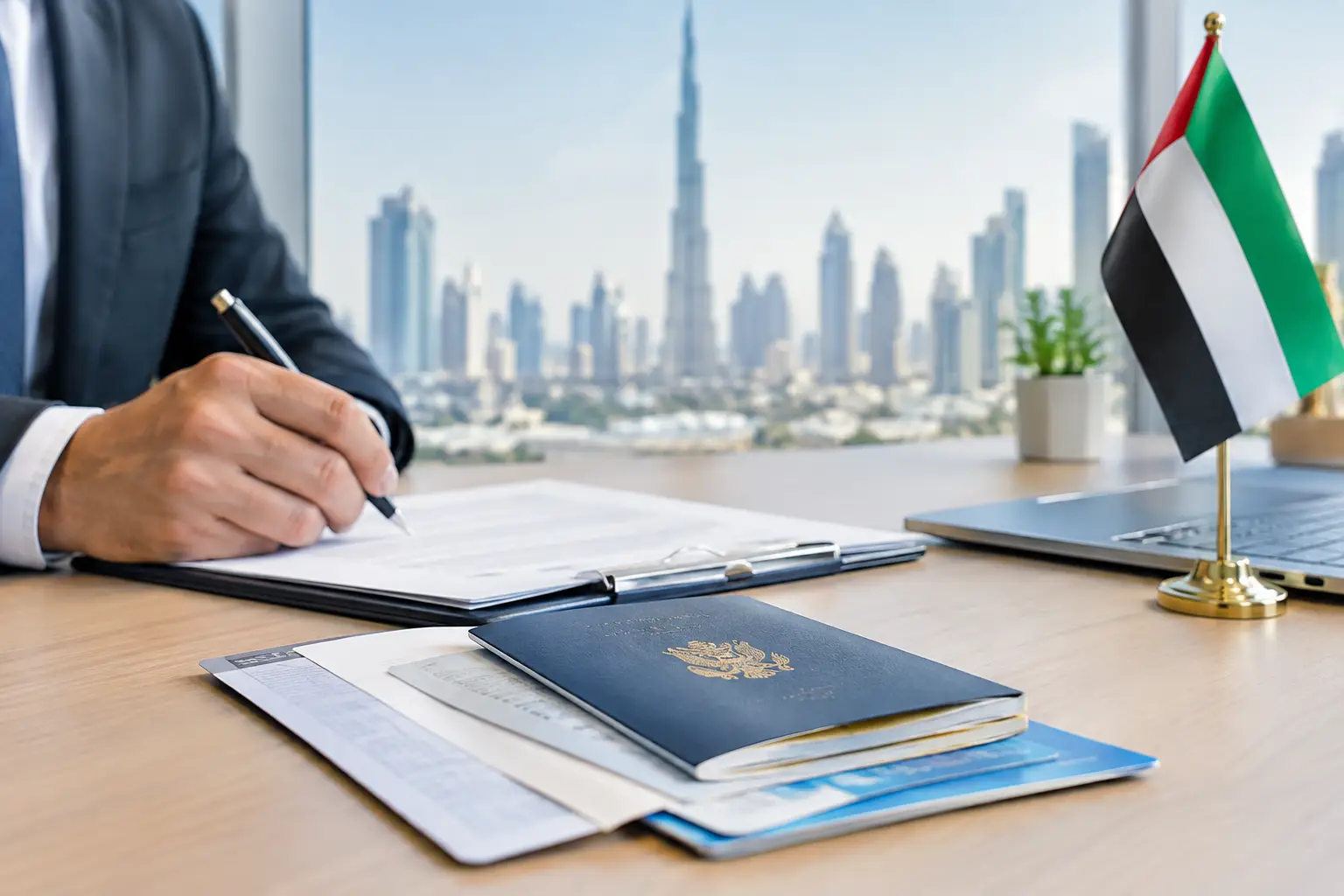
A visa application can stall over something as small as an unclear passport scan, an outdated trade license, or a missing attestation. For founders asking what documents need an investor visa in the UAE, the right answer depends on how you qualify: as a company owner, a partner in an existing business, or an investor applying under a long-term residence route.
The UAE offers several investor-focused residence options, each with its own eligibility criteria and document requirements. Preparing the core file early helps avoid repeat visits, rejected submissions, and delays to your plans for banking, leasing, hiring, or relocating family members.
Start by confirming the right investor visa route
The commonly used investor or partner residence visa is tied to ownership in a UAE mainland company, free zone company, or in some cases an approved investment. This route is often suitable for entrepreneurs who are actively setting up or operating a business in Dubai or another emirate.
A Golden Visa is different. It is a long-term residence category with its own investment thresholds and qualifying conditions, which may relate to property ownership, public investment funds, company ownership, or other approved categories. A company owner should not assume that a standard partner visa automatically qualifies them for a Golden Visa.
Your jurisdiction also matters. Mainland applications may involve different authority processes than free zone applications, while Dubai processing can involve immigration procedures that differ from other emirates. The documents are similar in many cases, but the format, validity period, and approvals required can vary.
What documents need an investor visa application?
For a standard UAE company investor or partner visa, most applicants should expect to prepare personal identity documents, company documents, and immigration forms. The following checklist covers the documents most commonly requested.
Personal documents
A valid passport is central to every application. It should generally have at least six months of validity remaining and clear, readable pages. Applicants also need recent passport-size photographs that meet UAE immigration specifications. Requirements can change by authority, so it is wise to obtain several current photos with a white background.
You will usually need a copy of your current UAE visa, entry permit, or cancellation paper if you are already in the country. Applicants changing status from a tourist visa, employment visa, or previous investor visa may need additional documents related to their existing immigration status.
An Emirates ID application is part of the residence process. After the entry permit or status change stage, you will complete biometrics if required and undergo a medical fitness test at an approved UAE center. The medical result and Emirates ID application record are then connected to the residence visa process.
Company ownership documents
The business documentation proves that you have a legitimate qualifying role as an owner or partner. For most company-linked investor visas, this includes a valid trade license and the company’s incorporation documents, such as the memorandum of association or share certificate.
Authorities may also request an establishment card, immigration card, or equivalent company immigration file. The exact document name can differ between mainland licensing authorities and free zones. If the company has multiple shareholders, the documents should clearly show the applicant’s name, ownership position, and shareholding value where applicable.
For mainland companies, a partnership contract or amended memorandum may be necessary when ownership changes have recently occurred. For free zone entities, a shareholder certificate, certificate of incorporation, or board resolution may be required, depending on the free zone’s procedures.
Financial and address supporting documents
Some visa categories require evidence of the investment amount, share capital, or financial standing. This may include bank statements, audited financial statements, a capital deposit certificate, or documents confirming the value of an eligible investment. Do not substitute informal invoices or unsigned statements for official evidence unless the relevant authority has expressly accepted them.
Applicants may also need a tenancy contract, Ejari, office lease, flexi-desk agreement, or other proof of the company’s registered address. This is especially relevant when the company license or visa quota is linked to a physical office requirement.
If you are applying through real estate investment rather than company ownership, expect to provide title deed documents and supporting records from the relevant land department or developer. The property must meet the applicable value, ownership, mortgage, and completion requirements for the selected visa category.
Documents that may be needed in specific situations
A complete core file does not always mean every applicant has the same requirements. Your personal circumstances, the visa route, and the authority reviewing the application can trigger additional requests.
If you are sponsoring family members after receiving your investor residence visa, you will generally need attested marriage and birth certificates, passport copies, photographs, medical fitness results for eligible family members, and proof that you meet sponsorship conditions. Documents issued outside the UAE may need authentication in the country of issue and attestation for use in the UAE. Translation into Arabic may also be required for documents not issued in Arabic or English.
If your name differs across your passport, company documents, or previous visas, prepare supporting evidence before submission. A marriage certificate, name-change document, or affidavit may help explain the discrepancy. Seemingly minor inconsistencies can create avoidable processing delays.
Applicants with a previous UAE residence visa should confirm whether cancellation is required before the new investor visa is issued. Those entering from outside the UAE may need an entry permit before completing medical testing, Emirates ID enrollment, and visa stamping or digital residence issuance.
Prepare documents in the format authorities accept
Having the right document is only half the task. Immigration and licensing authorities may reject files because scans are cropped, certificates have expired, or legalizations are incomplete. Use high-resolution color scans, ensure all corners of the passport and documents are visible, and check that names, dates, and company details match exactly across the application.
Validity periods deserve close attention. Passport validity, medical results, entry permits, company licenses, tenancy documents, and bank letters can all have time limits. Submitting a document that was acceptable when you began preparing but expired before filing can set the process back.
For foreign-issued documents, do not assume a notarization alone is enough. The required authentication path may involve notarization, government legalization, UAE embassy or consulate attestation, Ministry of Foreign Affairs attestation in the UAE, and certified translation. The sequence depends on the country of issue and the document type.
Common reasons investor visa applications are delayed
The most frequent problems are not complicated legal issues. They are incomplete company records, expired licenses, unclear proof of ownership, missing immigration documents, and documents that have not been properly attested.
Another common issue is choosing a visa category based on a headline investment amount without checking the full criteria. For example, a property investor may meet a stated property value but still need to satisfy ownership or financing conditions. A business owner may have a valid license but need updated shareholder documentation before their partner visa can proceed.
It is also worth separating company formation from residence eligibility. Registering a company can create the basis for an investor or partner visa, but it does not guarantee that every shareholder will receive a visa immediately. Visa quotas, office requirements, company immigration registration, and individual immigration history can affect timing.
A practical way to move forward
Before submitting anything, create one organized file containing your passport, photographs, current visa records, trade license, ownership documents, establishment card, address documents, and any investment evidence relevant to your route. Then verify which originals, attestations, and translations apply to your case.
JK Associates helps investors coordinate company formation, PRO services, visa processing, office solutions, and related compliance requirements under one managed process. This can be especially useful when your visa route depends on the structure of a new business, a shareholder update, or documentation from more than one authority.
A well-prepared investor visa file does more than reduce paperwork. It gives you a clearer path to establishing your UAE presence and lets you focus on the commercial decisions that brought you to the market in the first place.